
 By Treavor English
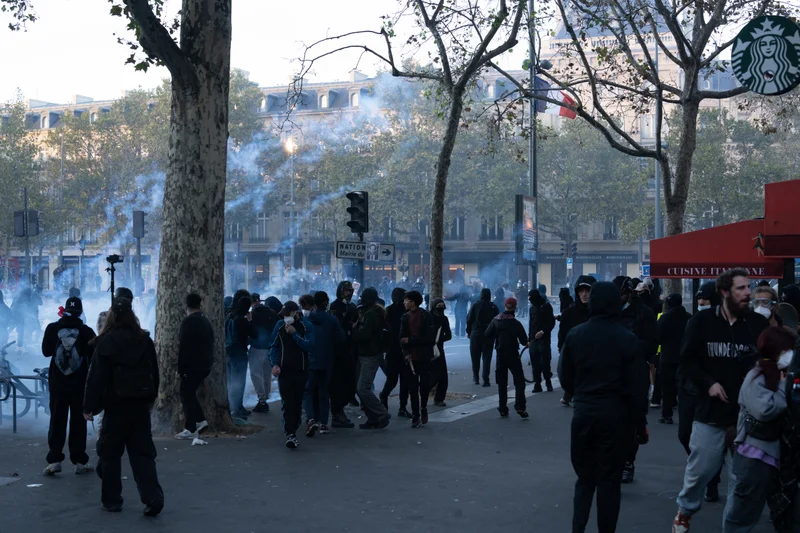
What happened
France is preparing more security after demonstrations over living costs and schools were accompanied by rioting, looting, and attacks on public buildings. Prime Minister Sébastien Lecornu has admitted failures in intelligence and police deployment. Another day of protests is planned for October 24.
President Donald Trump and other Republicans have blamed immigration, particularly Muslim migrants. French authorities have not established that immigrants as a group were responsible, according to the Associated Press. Peaceful demonstrations and violence occurred alongside one another.
People lost businesses. Residents deserve safe streets. The people who committed those crimes deserve to answer for them.
Before we turn that into a verdict on immigration, we need to know who did what. Then we need to look beyond the weekend. We're going to work backward through some history.
Through the countries people left, the places they passed through, and decisions made in Washington, London, and Paris. Some of it is ugly. The documents get uglier than the language officials used to describe what they were doing.
By the end, I think you'll see the immigration argument being attached to these riots differently.
What happened before the fires
French students were protesting conditions in education before October 17.
Human Rights Watch's October 14 account described serious injuries during the police response: a 15-year-old who lost a hand to an explosive police stun grenade, and a 14-year-old whose jaw was shattered by a tear-gas canister.
The organization reported that the government temporarily suspended stun-grenade use during school protests.
That belongs in the account of how the confrontation developed. So do the people hurt by rioters and the businesses looted afterward. We can examine police conduct and hold rioters responsible in the same article.
The immigration figures also require more care than the political speeches give them. France's statistical agency, INSEE, estimates that Algeria, Morocco, and Tunisia were the leading individual birth countries among immigrants arriving in 2024. Together, they accounted for about one fifth of arrivals.
More than a quarter came from Europe. Those are immigration figures, covering people who move for different reasons.
Asylum applicants are a different population. France's asylum office identifies Ukraine, the Democratic Republic of Congo, and Afghanistan as leading countries of origin in its published 2025 annual-report summary.
That gives us several histories to investigate. It also rules out the easy claim that everyone comes from the same kind of crisis. France has its own history to answer for.
In 2018, President Emmanuel Macron acknowledged that French soldiers tortured and killed Algerian independence activist Maurice Audin, or tortured him to death, after arresting him in 1957. His declaration recognized the institutional system that enabled torture and disappearances.
For decades, the official explanation was that Audin had escaped. His family kept looking for the truth about a man the state eventually acknowledged its soldiers had killed.
That does not explain every Algerian's decision to move. It does explain why a story about France and Algeria cannot begin with Algerians arriving in France. The relationship already contained conquest, coercion, and a struggle over who would govern.
Libya: The country on the way
An Eritrean woman held in a trafficking house in Tobruk told UN investigators she was repeatedly raped during more than six weeks of captivity. Her family paid a ransom for her release.
Another survivor described being raped in a hangar in front of her daughters and other detainees. Their accounts appear in a UN report published in February 2026, covering abuses in Libya during 2024 and 2025.
Investigators interviewed almost 100 migrants, asylum-seekers, and refugees from 16 countries. They described abduction, detention, torture, sexual exploitation, and ransom demands, often involving criminal networks with ties to authorities.
The word "transit" sounds harmless until you look at what happened along the route. Some people reaching Europe have already escaped one country and then survived captivity in another.
Libya matters to the migration story even when the person crossing the Mediterranean was born somewhere else. Go back to 2011. President Barack Obama authorized covert support for rebels seeking to remove Muammar Gaddafi, Reuters reported, citing government sources.
The authorization created a framework for possible activities; further permission was required for particular operations. Western military forces were also intervening openly.
The stated purpose of intervention was civilian protection. Britain's parliamentary inquiry later concluded that the mission shifted into regime change without an adequate strategy for what came afterward.
Its findings connected that failure to political and economic collapse, militia warfare, humanitarian and migrant crises, weapons proliferation, and the growth of Islamic State in North Africa.
The British government disputed central parts of the assessment. It said the intervention answered a genuine threat, followed the UN mandate, and saved civilian lives. It also acknowledged the destabilizing growth of militias and the country's limited capacity to absorb international support.
The inquiry went further than describing a bad outcome. It said Britain's part in the conflict and subsequent destabilization gave it a particular responsibility toward migrants and refugees. It described traffickers exploiting the absence of effective government.
That is an intervening country's own parliamentary committee identifying responsibility for the aftermath. The men committing rape and extortion remain responsible for their crimes. The history also includes governments whose intervention helped leave the country without the institutions needed to protect people from them.
Afghanistan: What a night raid left behind
Naim Faruqi was a 60-year-old tribal elder and provincial peace council member. According to Human Rights Watch, the Khost Protection Force shot him in the eye during a nighttime operation in Paktia province in December 2018.
His nephew, a student in his twenties, was shot in the mouth. They were among six civilians the organization reported killed in the operation. The incident appeared in an investigation documenting 14 cases involving CIA-backed Afghan strike forces between late 2017 and mid-2019.
Researchers interviewed 39 residents and witnesses, alongside rights workers and others familiar with the operations. The report described forces recruited, trained, equipped, and overseen by the CIA, operating outside ordinary military command structures. Its findings included unlawful killings, disappearances, and attacks on medical facilities.
The CIA disputed the report. It said it had not had sufficient time to study the particular allegations and argued that many were likely false or exaggerated.
The agency said it did not condone or knowingly participate in illegal activity and reviewed allegations involving foreign partners.
The allegations came from a human-rights investigation, not a criminal judgment. The agency backing the forces disputed them. American involvement reaches back long before those raids.
A May 9, 1980, State Department memorandum describes a weapons pipeline supporting insurgents fighting the Soviet occupation. Rifles, machine guns, ammunition, mines, and antitank weapons came from CIA stocks or purchases on the international market.
The CIA's Islamabad station chief coordinated operational details with Pakistani intelligence and President Muhammad Zia-ul-Haq. Earlier assistance included propaganda and nonlethal supplies. Lethal support expanded after the Soviet invasion in December 1979.
The Soviet Union invaded. Washington armed its opponents. Afghan factions, neighboring states, and later governments made further decisions of their own.
Civilians lived through a succession of wars in which foreign powers treated the country as strategically important and armed men as useful partners. The later American reconstruction mission produced an extensive official reckoning.
In 2021, the Special Inspector General for Afghanistan Reconstruction reviewed approximately $145 billion in spending over 20 years. Drawing on years of oversight and 760 interviews, it identified failures in strategy, sustainable planning, staffing, understanding Afghan conditions, and evaluating results.
The review also acknowledged gains, including improvements in literacy and child mortality.
There were achievements. There were also institutions whose survival depended on support that could change or end. For families depending on those institutions, sustainability meant whether a school, a job, or a source of protection would still exist.
Iran: Freedom had an exception
On June 6, 1953, senior CIA officials and Ambassador Loy Henderson discussed a preliminary operational plan for Project TPAJAX. The declassified memorandum records discussion of political pressure, the Iranian army, financial assistance to a successor government, and an eventual oil settlement.
It also covers the timing of public statements so they would not expose involvement in the plot. Parts remain redacted.
Officials were discussing how to change another country's government and avoid making their role obvious. In August, American and British intelligence helped overthrow Prime Minister Mohammad Mosaddeq. Declassified CIA histories document the operation alongside the participation of Iranian political and military actors.
Shah Mohammad Reza Pahlavi was already monarch. The coup removed his powerful opponent and consolidated his position.
The United States, which presents freedom as a founding principle, helped strengthen a ruler whose treatment of opponents would become the subject of a brutal human-rights record.
Amnesty International's November 1976 briefing described allegations of beatings, electric shocks, sexual violence, and the removal of nails and teeth during interrogation. Authorities had denied Amnesty prison access; its information came from former prisoners, relatives, trial observers, and other accounts.
One passage recounted lawyer Nuri Albala's description of defendant Massoud Ahmadzadeh exposing burns on his stomach and back during a 1972 trial. Another defendant told the lawyer that prisoners had been burned on a heated metal table.
The briefing also described detention without legal advice and secret investigations by SAVAK, the shah's security organization.
American diplomats were offering a different assessment. An August 1976 embassy cable said it had no hard facts on torture, defended much of Iran's judicial record, and concluded that conditions did not justify restrictions under the foreign-assistance provision being discussed.
Ambassador Richard Helms signed the cable. It nevertheless acknowledged the move to a one-party state, limits on expression, security-service scrutiny of newspapers, and editorial guidance publishers ignored at their peril.
The contradiction is in the documents. Human-rights investigators were challenging the prison system. American diplomats were defending an allied government whose power American intervention had helped consolidate.
The shah was overthrown in 1979. The government that followed built its own record of repression. Amnesty's later investigation of the Islamic Republic's 1988 prison massacres documented thousands of political prisoners disappearing into secret execution procedures.
Families were denied information about their relatives and, in many cases, their remains. The investigation examined survivor and family testimony, documents, and an audio recording of officials discussing the killings.
The Islamic Republic is responsible for those crimes. Its victims do not become less important because the government before it was also abusive. Washington's earlier support for the monarchy remains part of the history of how the relationship developed.
An individual departure still needs its own explanation. The coup establishes American intervention in Iran's government, not the cause of every migration that followed.
What we can see today
On February 24, 2026, the CIA published Farsi-language instructions inviting potential informants in Iran to contact it, AP reported. That is a public recruitment effort. It does not reveal how many sources were recruited or what operations followed.
On March 12, UNHCR reported preliminary assessments suggesting that up to 3.2 million people were temporarily displaced inside Iran during the ongoing conflict. Families were leaving major cities for safer areas.
The figure was a dated estimate of internal displacement, not a count of people arriving in Europe.
The public recruitment effort establishes that the CIA was seeking Iranian sources. It does not establish what undisclosed operations the agency may be conducting.
The children are growing up through all of it
Go back to the woman in the Libyan hangar. Her daughters were there. The UN account records the mother's assault.
Childhood-development research gives us reason to examine what exposure to that violence can mean for children, too. It cannot diagnose those particular girls. Harvard's Center on the Developing Child explains that strong, frequent, or prolonged adversity can keep a child's stress-response systems activated.
Without enough supportive relationships to buffer that response, toxic stress can disrupt development, affecting learning, attention, and physical and mental health. Support can reduce those risks.
A child is still developing while adults negotiate a ceasefire, process an asylum claim, or decide whether a camp will receive enough money. Childhood does not pause until the institutions catch up.
WHO's guidance for humanitarian settings identifies the foundations children need: health, nutrition, safety, responsive care, and opportunities to learn. Emergencies can threaten several at once. The guidance includes support for caregivers, including their mental health.
There is a limit to what we can demand of a parent who is also hungry, injured, grieving, or trying to get the family somewhere safe. Children's responses differ.
A stable, caring relationship can provide substantial protection, and research on resilience supports helping children recover rather than treating early harm as a life sentence.
We know enough to ask harder questions about what happens next. Can the family secure housing? Can the parents work?
Can the child return to school and obtain care? If they go home, is home livable? Those are decisions about development as well as immigration.
They concern the conditions in which a child will spend the next several years. Childhood trauma does not establish that a child will become violent. It establishes a reason to provide protection and support.
Children deserve that before anyone asks whether helping them might benefit a receiving country.
Poverty is a condition to examine, not a character verdict
Americans do not need to look abroad to find evidence that surroundings matter. A major Chicago study examined 343 neighborhood clusters and found that violence was associated with residents' mutual trust and willingness to intervene for their community.
Concentrated disadvantage and residential instability were part of that environment. It was an observational study, not a prediction of what every resident would do.
The Moving to Opportunity experiment offered a different test. Families were randomly offered housing assistance, including vouchers restricted to lower-poverty neighborhoods. A long-term study found initial reductions in violent-crime arrests among young men offered those vouchers, alongside increases in property-crime arrests.
Effects weakened over time. Researchers could not isolate the decisive neighborhood characteristics and cautioned that arrest records can reflect differences in enforcement.
The results are complicated because people and neighborhoods are complicated. They still give us reason to examine the conditions around violence instead of treating a population's supposed character as the whole explanation. Poor residents also suffer disproportionately from violence.
A Bureau of Justice Statistics analysis covering 2008-2012 found that people below the federal poverty threshold experienced nonfatal violent victimization at more than twice the rate of people in its high-income category. These figures measure who was victimized, not who committed the offenses.
That should matter to anyone claiming to care about safety. The people living in a dangerous neighborhood are living with the danger every day. An American neighborhood is not a whole country, and these studies cannot diagnose the French riots.
The research belongs here because it challenges the habit of discussing behavior while ignoring the conditions in which people are expected to live.
Back at the border
Brown University's Costs of War researchers estimated in 2021 that at least 38 million people had been displaced in eight post-9/11 wars the United States launched or participated in: Afghanistan, Iraq, Pakistan, Yemen, Somalia, the Philippines, Libya, and Syria.
The estimate included internal displacement and movement across borders. It was not a tally of immigrants entering Western countries, and it did not assign every displacement solely to American forces.
Other refugee crises have different perpetrators. More than one million Rohingya live in Bangladesh, most having arrived after fleeing persecution and violence in Myanmar in 2017. UN investigators documented Myanmar's military committing mass killings, sexual violence, and village destruction.
The facts do not support blaming one country for every refugee. They do support naming the part U.S. and European governments played in specific crises.
"Helped" is a serious word when the help included weapons, covert action, or intervention without a workable plan for the aftermath. The people who looted shops in France are responsible for those acts.
Evidence about those incidents has to establish who they were and what they did. The wider immigration argument deserves the same standard.
We cannot describe the suffering in Libya, the raids in Afghanistan, or the prison records in Iran, then act as though people arrived carrying no history at all.
In a receiving country, the story can begin with the arrival because that is when the consequences become local.
For the person arriving, it may have begun years earlier with an arrest, a threat, a destroyed home, or the loss of someone the family depended on. That history does not fit in a clip of a burning car. It belongs in the account anyway.
So does the evidence that these conditions can change. Two hundred years ago, extreme poverty was ordinary life for most of humanity.
A historical reconstruction published by the OECD estimates that about 76 percent of the world lived in extreme poverty in 1820, compared with about 10 percent in 2018.
Those are estimates built around the cost of basic needs, not a precise census of every household two centuries ago. The scale of the change is still enormous.
The more recent record is substantial on its own.
In its June 2025 revision, the World Bank estimated that the number of people living in extreme poverty fell by roughly 1.5 billion between 1990 and 2022, with much of that decline in East Asia, particularly China.
That series uses a different poverty measure from the historical reconstruction. Both document how much living conditions can improve.
Crossing an extreme-poverty line does not mean a family has a comfortable life. But a world in which most people struggle to afford the basics is different from one in which most can. People built that difference.
People across countries and generations worked, organized, researched, governed, and raised children through it. The same species capable of the brutality in these records is capable of that kind of progress.
We ought to demand more of ourselves because we have evidence of what is possible.
Imagine a child growing up in one of the places we have walked through in this story, with enough to eat, a school that stays open, and parents who can plan beyond the next emergency.
Imagine that child reaching adulthood with the freedom to stay, build something, and raise a family there. Leaving home could be a choice instead of the price of surviving. That is a future worth putting money, work, and political pressure behind.
We do not have to pretend it will happen automatically. We have to decide it deserves the effort. Look how far humanity came in the last two hundred years, even with all the damage we did along the way.
Imagine what we could accomplish over the next two hundred if we put more of our power into giving people a chance to live.
Sources & reporting notes
- France to deploy troops, admits to failures over weekend unrest
Reuters · Checked October 20, 2026; event and estimate dates specified in article
Reporting note
France is preparing more security after demonstrations over living costs and schools were accompanied by rioting, looting, and attacks on public buildings. Prime Minister Sébastien Lecornu has admitted failures in intelligence and police deployment. Another day of protests is planned for October 24.
Relevant passages identified by the linked article text and source title
- FACT FOCUS: Trump and Republicans blame France’s immigrants for riots without evidence
Associated Press · Checked October 20, 2026; event and estimate dates specified in article
Reporting note
President Donald Trump and other Republicans have blamed immigration, particularly Muslim migrants. French authorities have not established that immigrants as a group were responsible, according to the Associated Press. Peaceful demonstrations and violence occurred alongside one another. People lost businesses. Residents deserve safe streets. The people who committed those crimes deserve to answer for them. Before we turn that into a verdict on immigration, we need to know who did what. Then we need to look beyond the weekend. We're going to work backward through some history. Through the countries people left, the places they passed through, and decisions made in Washington, London, and Paris. Some of it is ugly. The documents get uglier than the language officials used to describe what they were doing. By the end, I think you'll see the immigration argument being attached to these riots differently.
Relevant passages identified by the linked article text and source title
- French High School Student Protests Met with Excessive Force
Human Rights Watch · Checked October 20, 2026; event and estimate dates specified in article
Reporting note
French students were protesting conditions in education before October 17. Human Rights Watch's October 14 account described serious injuries during the police response: a 15-year-old who lost a hand to an explosive police stun grenade, and a 14-year-old whose jaw was shattered by a tear-gas canister. The organization reported that the government temporarily suspended stun-grenade use during school protests.
Relevant passages identified by the linked article text and source title
- Immigration statistics: immigrants arriving in France
INSEE · Checked October 20, 2026; event and estimate dates specified in article
Reporting note
That belongs in the account of how the confrontation developed. So do the people hurt by rioters and the businesses looted afterward. We can examine police conduct and hold rioters responsible in the same article. The immigration figures also require more care than the political speeches give them. France's statistical agency, INSEE, estimates that Algeria, Morocco, and Tunisia were the leading individual birth countries among immigrants arriving in 2024. Together, they accounted for about one fifth of arrivals. More than a quarter came from Europe. Those are immigration figures, covering people who move for different reasons.
Relevant passages identified by the linked article text and source title
- 2025 annual report summary
OFPRA · Checked October 20, 2026; event and estimate dates specified in article
Reporting note
Asylum applicants are a different population. France's asylum office identifies Ukraine, the Democratic Republic of Congo, and Afghanistan as leading countries of origin in its published 2025 annual-report summary.
Relevant passages identified by the linked article text and source title
- Declaration on the death of Maurice Audin
French presidency · Checked October 20, 2026; event and estimate dates specified in article
Reporting note
That gives us several histories to investigate. It also rules out the easy claim that everyone comes from the same kind of crisis. France has its own history to answer for. In 2018, President Emmanuel Macron acknowledged that French soldiers tortured and killed Algerian independence activist Maurice Audin, or tortured him to death, after arresting him in 1957. His declaration recognized the institutional system that enabled torture and disappearances. For decades, the official explanation was that Audin had escaped. His family kept looking for the truth about a man the state eventually acknowledged its soldiers had killed. That does not explain every Algerian's decision to move. It does explain why a story about France and Algeria cannot begin with Algerians arriving in France. The relationship already contained conquest, coercion, and a struggle over who would govern.
Relevant passages identified by the linked article text and source title
- Migrants in Libya victims of violent business model of systemic violations and abuses
UN Human Rights Office · Checked October 20, 2026; event and estimate dates specified in article
Reporting note
An Eritrean woman held in a trafficking house in Tobruk told UN investigators she was repeatedly raped during more than six weeks of captivity. Her family paid a ransom for her release. Another survivor described being raped in a hangar in front of her daughters and other detainees. Their accounts appear in a UN report published in February 2026, covering abuses in Libya during 2024 and 2025. Investigators interviewed almost 100 migrants, asylum-seekers, and refugees from 16 countries. They described abduction, detention, torture, sexual exploitation, and ransom demands, often involving criminal networks with ties to authorities.
Relevant passages identified by the linked article text and source title
- Obama authorizes secret help for Libya rebels
Reuters · Checked October 20, 2026; event and estimate dates specified in article
Reporting note
The word "transit" sounds harmless until you look at what happened along the route. Some people reaching Europe have already escaped one country and then survived captivity in another. Libya matters to the migration story even when the person crossing the Mediterranean was born somewhere else. Go back to 2011. President Barack Obama authorized covert support for rebels seeking to remove Muammar Gaddafi, Reuters reported, citing government sources. The authorization created a framework for possible activities; further permission was required for particular operations. Western military forces were also intervening openly.
Relevant passages identified by the linked article text and source title
- Libya: Examination of intervention and collapse and the UK’s future policy options
House of Commons Foreign Affairs Committee · Checked October 20, 2026; event and estimate dates specified in article
Reporting note
The stated purpose of intervention was civilian protection. Britain's parliamentary inquiry later concluded that the mission shifted into regime change without an adequate strategy for what came afterward. Its findings connected that failure to political and economic collapse, militia warfare, humanitarian and migrant crises, weapons proliferation, and the growth of Islamic State in North Africa.
Relevant passages identified by the linked article text and source title
- Government response to the Foreign Affairs Committee’s Libya report
UK government · Checked October 20, 2026; event and estimate dates specified in article
Reporting note
The British government disputed central parts of the assessment. It said the intervention answered a genuine threat, followed the UN mandate, and saved civilian lives. It also acknowledged the destabilizing growth of militias and the country's limited capacity to absorb international support.
Relevant passages identified by the linked article text and source title
- Libya report: conclusions and recommendations
House of Commons Foreign Affairs Committee · Checked October 20, 2026; event and estimate dates specified in article
Reporting note
The inquiry went further than describing a bad outcome. It said Britain's part in the conflict and subsequent destabilization gave it a particular responsibility toward migrants and refugees. It described traffickers exploiting the absence of effective government. That is an intervening country's own parliamentary committee identifying responsibility for the aftermath. The men committing rape and extortion remain responsible for their crimes. The history also includes governments whose intervention helped leave the country without the institutions needed to protect people from them.
Relevant passages identified by the linked article text and source title
- They’ve Shot Many: Abusive Night Raids by CIA-Backed Afghan Strike Forces
Human Rights Watch · Checked October 20, 2026; event and estimate dates specified in article
Reporting note
Naim Faruqi was a 60-year-old tribal elder and provincial peace council member. According to Human Rights Watch, the Khost Protection Force shot him in the eye during a nighttime operation in Paktia province in December 2018. His nephew, a student in his twenties, was shot in the mouth. They were among six civilians the organization reported killed in the operation. The incident appeared in an investigation documenting 14 cases involving CIA-backed Afghan strike forces between late 2017 and mid-2019. Researchers interviewed 39 residents and witnesses, alongside rights workers and others familiar with the operations. The report described forces recruited, trained, equipped, and overseen by the CIA, operating outside ordinary military command structures. Its findings included unlawful killings, disappearances, and attacks on medical facilities.
Relevant passages identified by the linked article text and source title
- CIA response to the Afghan strike-forces investigation
CIA, reproduced by Human Rights Watch · Checked October 20, 2026; event and estimate dates specified in article
Reporting note
The CIA disputed the report. It said it had not had sufficient time to study the particular allegations and argued that many were likely false or exaggerated. The agency said it did not condone or knowingly participate in illegal activity and reviewed allegations involving foreign partners.
Relevant passages identified by the linked article text and source title
- May 9, 1980 memorandum on assistance to Afghan insurgents
U.S. Department of State, Office of the Historian · Checked October 20, 2026; event and estimate dates specified in article
Reporting note
The allegations came from a human-rights investigation, not a criminal judgment. The agency backing the forces disputed them. American involvement reaches back long before those raids. A May 9, 1980, State Department memorandum describes a weapons pipeline supporting insurgents fighting the Soviet occupation. Rifles, machine guns, ammunition, mines, and antitank weapons came from CIA stocks or purchases on the international market. The CIA's Islamabad station chief coordinated operational details with Pakistani intelligence and President Muhammad Zia-ul-Haq. Earlier assistance included propaganda and nonlethal supplies. Lethal support expanded after the Soviet invasion in December 1979.
Relevant passages identified by the linked article text and source title
- What We Need to Learn: Lessons from Twenty Years of Afghanistan Reconstruction
Special Inspector General for Afghanistan Reconstruction · Checked October 20, 2026; event and estimate dates specified in article
Reporting note
The Soviet Union invaded. Washington armed its opponents. Afghan factions, neighboring states, and later governments made further decisions of their own. Civilians lived through a succession of wars in which foreign powers treated the country as strategically important and armed men as useful partners. The later American reconstruction mission produced an extensive official reckoning. In 2021, the Special Inspector General for Afghanistan Reconstruction reviewed approximately $145 billion in spending over 20 years. Drawing on years of oversight and 760 interviews, it identified failures in strategy, sustainable planning, staffing, understanding Afghan conditions, and evaluating results. The review also acknowledged gains, including improvements in literacy and child mortality. There were achievements. There were also institutions whose survival depended on support that could change or end. For families depending on those institutions, sustainability meant whether a school, a job, or a source of protection would still exist.
Relevant passages identified by the linked article text and source title
- June 6, 1953 memorandum: preliminary operational plan for TPAJAX
U.S. Department of State, Office of the Historian · Checked October 20, 2026; event and estimate dates specified in article
Reporting note
On June 6, 1953, senior CIA officials and Ambassador Loy Henderson discussed a preliminary operational plan for Project TPAJAX. The declassified memorandum records discussion of political pressure, the Iranian army, financial assistance to a successor government, and an eventual oil settlement. It also covers the timing of public statements so they would not expose involvement in the plot. Parts remain redacted.
Relevant passages identified by the linked article text and source title
- CIA Confirms Role in 1953 Iran Coup
National Security Archive / declassified CIA records · Checked October 20, 2026; event and estimate dates specified in article
Reporting note
Officials were discussing how to change another country's government and avoid making their role obvious. In August, American and British intelligence helped overthrow Prime Minister Mohammad Mosaddeq. Declassified CIA histories document the operation alongside the participation of Iranian political and military actors. Shah Mohammad Reza Pahlavi was already monarch. The coup removed his powerful opponent and consolidated his position.
Relevant passages identified by the linked article text and source title
- Iran briefing, November 1976
Amnesty International · Checked October 20, 2026; event and estimate dates specified in article
Reporting note
The United States, which presents freedom as a founding principle, helped strengthen a ruler whose treatment of opponents would become the subject of a brutal human-rights record. Amnesty International's November 1976 briefing described allegations of beatings, electric shocks, sexual violence, and the removal of nails and teeth during interrogation. Authorities had denied Amnesty prison access; its information came from former prisoners, relatives, trial observers, and other accounts. One passage recounted lawyer Nuri Albala's description of defendant Massoud Ahmadzadeh exposing burns on his stomach and back during a 1972 trial. Another defendant told the lawyer that prisoners had been burned on a heated metal table. The briefing also described detention without legal advice and secret investigations by SAVAK, the shah's security organization.
Relevant passages identified by the linked article text and source title
- August 1976 embassy cable on human rights in Iran
U.S. Department of State, Office of the Historian · Checked October 20, 2026; event and estimate dates specified in article
Reporting note
American diplomats were offering a different assessment. An August 1976 embassy cable said it had no hard facts on torture, defended much of Iran's judicial record, and concluded that conditions did not justify restrictions under the foreign-assistance provision being discussed. Ambassador Richard Helms signed the cable. It nevertheless acknowledged the move to a one-party state, limits on expression, security-service scrutiny of newspapers, and editorial guidance publishers ignored at their peril.
Relevant passages identified by the linked article text and source title
- Blood-soaked Secrets: Why Iran’s 1988 Prison Massacres Are Ongoing Crimes Against Humanity
Amnesty International · Checked October 20, 2026; event and estimate dates specified in article
Reporting note
The contradiction is in the documents. Human-rights investigators were challenging the prison system. American diplomats were defending an allied government whose power American intervention had helped consolidate. The shah was overthrown in 1979. The government that followed built its own record of repression. Amnesty's later investigation of the Islamic Republic's 1988 prison massacres documented thousands of political prisoners disappearing into secret execution procedures. Families were denied information about their relatives and, in many cases, their remains. The investigation examined survivor and family testimony, documents, and an audio recording of officials discussing the killings. The Islamic Republic is responsible for those crimes. Its victims do not become less important because the government before it was also abusive. Washington's earlier support for the monarchy remains part of the history of how the relationship developed. An individual departure still needs its own explanation. The coup establishes American intervention in Iran's government, not the cause of every migration that followed.
Relevant passages identified by the linked article text and source title
- CIA publishes Farsi-language instructions for potential Iranian informants
Associated Press · Checked October 20, 2026; event and estimate dates specified in article
Reporting note
On February 24, 2026, the CIA published Farsi-language instructions inviting potential informants in Iran to contact it, AP reported. That is a public recruitment effort. It does not reveal how many sources were recruited or what operations followed. The public recruitment effort establishes that the CIA was seeking Iranian sources. It does not establish what undisclosed operations the agency may be conducting.
Relevant passages identified by the linked article text and source title
- Up to 3.2 million Iranians temporarily displaced inside Iran as conflict intensifies
UNHCR · Checked October 20, 2026; event and estimate dates specified in article
Reporting note
On March 12, UNHCR reported preliminary assessments suggesting that up to 3.2 million people were temporarily displaced inside Iran during the ongoing conflict. Families were leaving major cities for safer areas. The figure was a dated estimate of internal displacement, not a count of people arriving in Europe.
Relevant passages identified by the linked article text and source title
- Toxic Stress
Harvard Center on the Developing Child · Checked October 20, 2026; event and estimate dates specified in article
Reporting note
Go back to the woman in the Libyan hangar. Her daughters were there. The UN account records the mother's assault. Childhood-development research gives us reason to examine what exposure to that violence can mean for children, too. It cannot diagnose those particular girls. Harvard's Center on the Developing Child explains that strong, frequent, or prolonged adversity can keep a child's stress-response systems activated. Without enough supportive relationships to buffer that response, toxic stress can disrupt development, affecting learning, attention, and physical and mental health. Support can reduce those risks.
Relevant passages identified by the linked article text and source title
- Early childhood development in conflict-affected countries
World Health Organization · Checked October 20, 2026; event and estimate dates specified in article
Reporting note
A child is still developing while adults negotiate a ceasefire, process an asylum claim, or decide whether a camp will receive enough money. Childhood does not pause until the institutions catch up. WHO's guidance for humanitarian settings identifies the foundations children need: health, nutrition, safety, responsive care, and opportunities to learn. Emergencies can threaten several at once. The guidance includes support for caregivers, including their mental health.
Relevant passages identified by the linked article text and source title
- Supportive Relationships and Active Skill-Building Strengthen the Foundations of Resilience
Harvard Center on the Developing Child · Checked October 20, 2026; event and estimate dates specified in article
Reporting note
There is a limit to what we can demand of a parent who is also hungry, injured, grieving, or trying to get the family somewhere safe. Children's responses differ. A stable, caring relationship can provide substantial protection, and research on resilience supports helping children recover rather than treating early harm as a life sentence. We know enough to ask harder questions about what happens next. Can the family secure housing? Can the parents work? Can the child return to school and obtain care? If they go home, is home livable? Those are decisions about development as well as immigration. They concern the conditions in which a child will spend the next several years. Childhood trauma does not establish that a child will become violent. It establishes a reason to provide protection and support. Children deserve that before anyone asks whether helping them might benefit a receiving country.
Relevant passages identified by the linked article text and source title
- Neighborhood Collective Efficacy: Does It Help Reduce Violence?
National Institute of Justice · Checked October 20, 2026; event and estimate dates specified in article
Reporting note
Americans do not need to look abroad to find evidence that surroundings matter. A major Chicago study examined 343 neighborhood clusters and found that violence was associated with residents' mutual trust and willingness to intervene for their community. Concentrated disadvantage and residential instability were part of that environment. It was an observational study, not a prediction of what every resident would do.
Relevant passages identified by the linked article text and source title
- Long-term neighborhood effects on crime: evidence from Moving to Opportunity
Moving to Opportunity research team / PubMed Central · Checked October 20, 2026; event and estimate dates specified in article
Reporting note
The Moving to Opportunity experiment offered a different test. Families were randomly offered housing assistance, including vouchers restricted to lower-poverty neighborhoods. A long-term study found initial reductions in violent-crime arrests among young men offered those vouchers, alongside increases in property-crime arrests. Effects weakened over time. Researchers could not isolate the decisive neighborhood characteristics and cautioned that arrest records can reflect differences in enforcement.
Relevant passages identified by the linked article text and source title
- Household Poverty and Nonfatal Violent Victimization, 2008–2012
Bureau of Justice Statistics · Checked October 20, 2026; event and estimate dates specified in article
Reporting note
The results are complicated because people and neighborhoods are complicated. They still give us reason to examine the conditions around violence instead of treating a population's supposed character as the whole explanation. Poor residents also suffer disproportionately from violence. A Bureau of Justice Statistics analysis covering 2008-2012 found that people below the federal poverty threshold experienced nonfatal violent victimization at more than twice the rate of people in its high-income category. These figures measure who was victimized, not who committed the offenses. That should matter to anyone claiming to care about safety. The people living in a dangerous neighborhood are living with the danger every day. An American neighborhood is not a whole country, and these studies cannot diagnose the French riots. The research belongs here because it challenges the habit of discussing behavior while ignoring the conditions in which people are expected to live.
Relevant passages identified by the linked article text and source title
- Creating Refugees: Displacement Caused by the United States’ Post-9/11 Wars, August 2021 update
Brown University Costs of War · Checked October 20, 2026; event and estimate dates specified in article
Reporting note
Brown University's Costs of War researchers estimated in 2021 that at least 38 million people had been displaced in eight post-9/11 wars the United States launched or participated in: Afghanistan, Iraq, Pakistan, Yemen, Somalia, the Philippines, Libya, and Syria. The estimate included internal displacement and movement across borders. It was not a tally of immigrants entering Western countries, and it did not assign every displacement solely to American forces.
Relevant passages identified by the linked article text and source title
- Bangladesh country overview
UNHCR · Checked October 20, 2026; event and estimate dates specified in article
Reporting note
Other refugee crises have different perpetrators. More than one million Rohingya live in Bangladesh, most having arrived after fleeing persecution and violence in Myanmar in 2017. UN investigators documented Myanmar's military committing mass killings, sexual violence, and village destruction.
Relevant passages identified by the linked article text and source title
- Myanmar fact-finding mission’s account of violations
UN Human Rights Office · Checked October 20, 2026; event and estimate dates specified in article
Reporting note
Other refugee crises have different perpetrators. More than one million Rohingya live in Bangladesh, most having arrived after fleeing persecution and violence in Myanmar in 2017. UN investigators documented Myanmar's military committing mass killings, sexual violence, and village destruction.
Relevant passages identified by the linked article text and source title
- Global extreme poverty: Present and past since 1820
OECD / Michail Moatsos · Checked October 20, 2026; event and estimate dates specified in article
Reporting note
The facts do not support blaming one country for every refugee. They do support naming the part U.S. and European governments played in specific crises. "Helped" is a serious word when the help included weapons, covert action, or intervention without a workable plan for the aftermath. The people who looted shops in France are responsible for those acts. Evidence about those incidents has to establish who they were and what they did. The wider immigration argument deserves the same standard. We cannot describe the suffering in Libya, the raids in Afghanistan, or the prison records in Iran, then act as though people arrived carrying no history at all. In a receiving country, the story can begin with the arrival because that is when the consequences become local. For the person arriving, it may have begun years earlier with an arrest, a threat, a destroyed home, or the loss of someone the family depended on. That history does not fit in a clip of a burning car. It belongs in the account anyway. So does the evidence that these conditions can change. Two hundred years ago, extreme poverty was ordinary life for most of humanity. A historical reconstruction published by the OECD estimates that about 76 percent of the world lived in extreme poverty in 1820, compared with about 10 percent in 2018. Those are estimates built around the cost of basic needs, not a precise census of every household two centuries ago. The scale of the change is still enormous. Crossing an extreme-poverty line does not mean a family has a comfortable life. But a world in which most people struggle to afford the basics is different from one in which most can. People built that difference. People across countries and generations worked, organized, researched, governed, and raised children through it. The same species capable of the brutality in these records is capable of that kind of progress. We ought to demand more of ourselves because we have evidence of what is possible. Imagine a child growing up in one of the places we have walked through in this story, with enough to eat, a school that stays open, and parents who can plan beyond the next emergency. Imagine that child reaching adulthood with the freedom to stay, build something, and raise a family there. Leaving home could be a choice instead of the price of surviving. That is a future worth putting money, work, and political pressure behind. We do not have to pretend it will happen automatically. We have to decide it deserves the effort. Look how far humanity came in the last two hundred years, even with all the damage we did along the way. Imagine what we could accomplish over the next two hundred if we put more of our power into giving people a chance to live. REPORTING NOTE This feature draws on declassified records, official statistics, government reviews, academic research, and published investigations. Survivor and witness accounts are attributed to the organizations that collected them. Hardcore News did not conduct those interviews. This reported analysis examines the history and conditions surrounding migration. It does not establish that foreign intervention or immigration caused the October 2026 riots.
Relevant passages identified by the linked article text and source title
- June 2025 Update to Global Poverty Lines
World Bank · Checked October 20, 2026; event and estimate dates specified in article
Reporting note
The more recent record is substantial on its own. In its June 2025 revision, the World Bank estimated that the number of people living in extreme poverty fell by roughly 1.5 billion between 1990 and 2022, with much of that decline in East Asia, particularly China. That series uses a different poverty measure from the historical reconstruction. Both document how much living conditions can improve. Crossing an extreme-poverty line does not mean a family has a comfortable life. But a world in which most people struggle to afford the basics is different from one in which most can. People built that difference. People across countries and generations worked, organized, researched, governed, and raised children through it. The same species capable of the brutality in these records is capable of that kind of progress. We ought to demand more of ourselves because we have evidence of what is possible. Imagine a child growing up in one of the places we have walked through in this story, with enough to eat, a school that stays open, and parents who can plan beyond the next emergency. Imagine that child reaching adulthood with the freedom to stay, build something, and raise a family there. Leaving home could be a choice instead of the price of surviving. That is a future worth putting money, work, and political pressure behind. We do not have to pretend it will happen automatically. We have to decide it deserves the effort. Look how far humanity came in the last two hundred years, even with all the damage we did along the way. Imagine what we could accomplish over the next two hundred if we put more of our power into giving people a chance to live. REPORTING NOTE This feature draws on declassified records, official statistics, government reviews, academic research, and published investigations. Survivor and witness accounts are attributed to the organizations that collected them. Hardcore News did not conduct those interviews. This reported analysis examines the history and conditions surrounding migration. It does not establish that foreign intervention or immigration caused the October 2026 riots.
Relevant passages identified by the linked article text and source title
AI assisted with research, drafting and editing. Read our ethics & AI-use policy.
Story details
- Event
- October 20, 2026
- Published
- October 21, 2026 at 12:00 AM EDT
- Sources checked
- Oct 20, 2026
Reported analysis
News analysis · Reporting checked October 20, 2026
How this story was made
This feature draws on declassified records, official statistics, government reviews, academic research, and published investigations. Survivor and witness accounts are attributed to the organizations that collected them. Hardcore News did not conduct those interviews. This reported analysis examines the history and conditions surrounding migration. It does not establish that foreign intervention or immigration caused the October 2026 riots.
Corrections and updates
- 2026-10-21 Replaced the White House briefing-room file photo with Jorge Jaramillo’s photograph of the October 17, 2026 protests and unrest at Place de la République in Paris. Added the location, date, photographer credit and CC BY-SA 4.0 license. Article wording and source reporting are unchanged.
- 2026-10-21 Citation correction: connected the CIA recruitment paragraph to the AP recruitment report, and removed that claim from the UNHCR displacement source description. Article wording, underlying source URLs and original publication date retained.
Comments
No comments yet.